
The history of photography on display at MUDEC Milan

At MUDEC – the Museum of Cultures in Milan, the exhibition “100 Photographs to Inherit the World” is on view from 7 March to 28 June.
The museum’s new exhibition project unfolds as a visual journey that places photography at the centre, presenting it as a tool for interpreting the world — a medium capable of narrating the past, revealing who we are, and imagining who we might become. It is the language of contemporaneity and, at the same time, the visual memory of humanity.
The idea of “inheriting the world” becomes a reflection on our present — a complex moment marked by uncertainty. From this premise emerges the exhibition’s historical approach. Curated by Denis Curti in collaboration with Alessio Fusi and Alessandro Curti, the show is organised into six sections that retrace the history of photography, from the visual experiments of the early nineteenth century to the present day.
Cover image: Sandy Skoglund, The Green House (1990), Courtesy of Paci Contemporary Gallery (Brescia – Porto Cervo), © 1990, Sandy Skoglund.
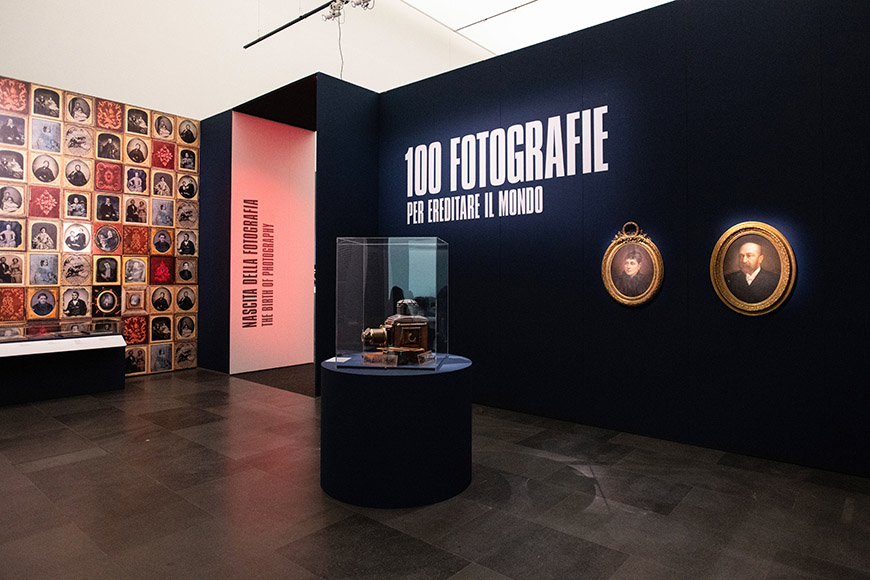
100 Photographs to Inherit the World, MUDEC, Milan; installation view. Photo © Jule Hering
THE EXHIBITION
After the introductory section, “Society Without Images – Society With Images” – which, through silhouettes, daguerreotypes, and tintypes, illustrates the transition from a world in which images were rare and singular to one in which they became social, familial, and identity‑shaping tools – the first section, “The Birth of Photography,” opens.
It is dedicated to the early technical experiments of Niépce and Daguerre, to the visionary portraits of Julia Margaret Cameron, to the political and allegorical compositions of Hippolyte Bayard, and to the photographs of Roger Fenton, among the first to translate the devastation of the Crimean War into images in 1855.
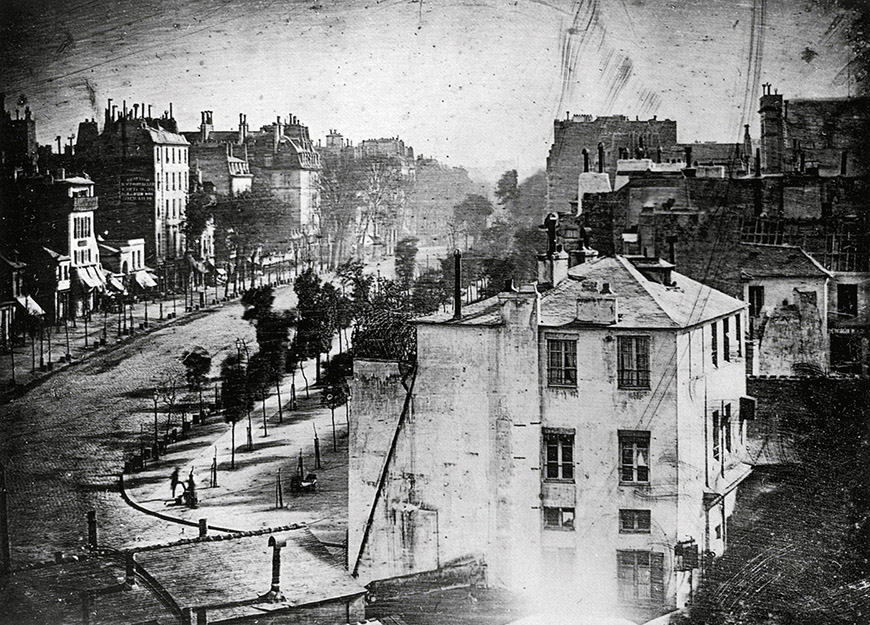
Daguerre, Boulevard du Temple (1839), © Louis-Jacques-Mandé Daguerre / public domain
“Photography: Between Reality and Fiction” is the second section of the exhibition, marking the transition toward a medium that, now technically mature, begins to explore new linguistic possibilities. Within this landscape emerge the Surrealist experiments of Man Ray, the avant‑garde framings of Aleksandr Rodchenko, and the irony of André Kertész. Alongside them, the works of Henri Cartier‑Bresson introduce a new conception of photography, in which the image conveys a sense of unpredictability that is only seemingly spontaneous. The visionary compositions of Mario Giacomelli and the conceptual inventions of Joan Fontcuberta complete the section.
The third section, “Photography as Document,” is dedicated to photography that observes the world and records real events. This chapter brings together images that have narrated the twentieth century and, more broadly, moments that have left an indelible mark on contemporary history: the Great Depression, the Moon landing, the fall of the Berlin Wall, the 9/11 attacks, and the events linked to the pandemic.
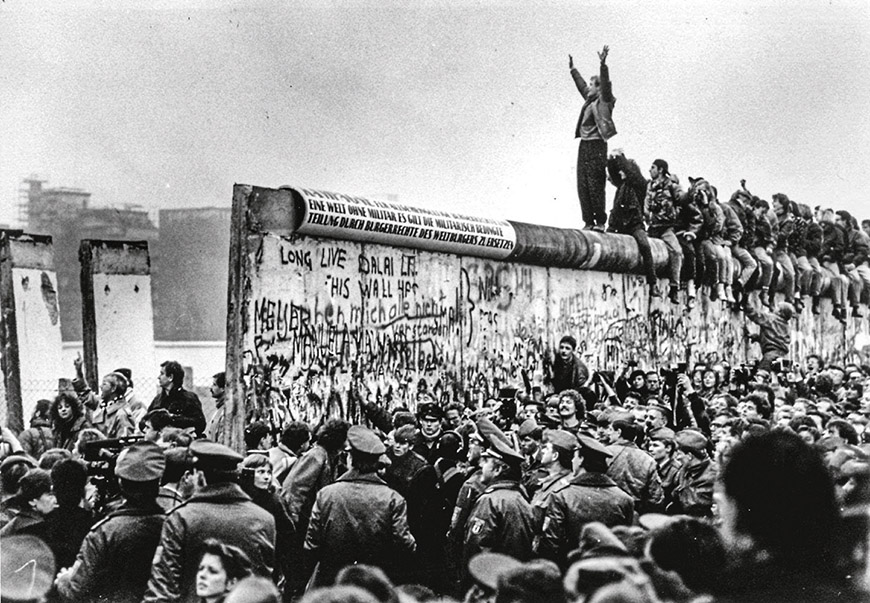
Carol Guzy, Berlin Wall (1989), © Carol Guzy / The Washington Post / Getty Images
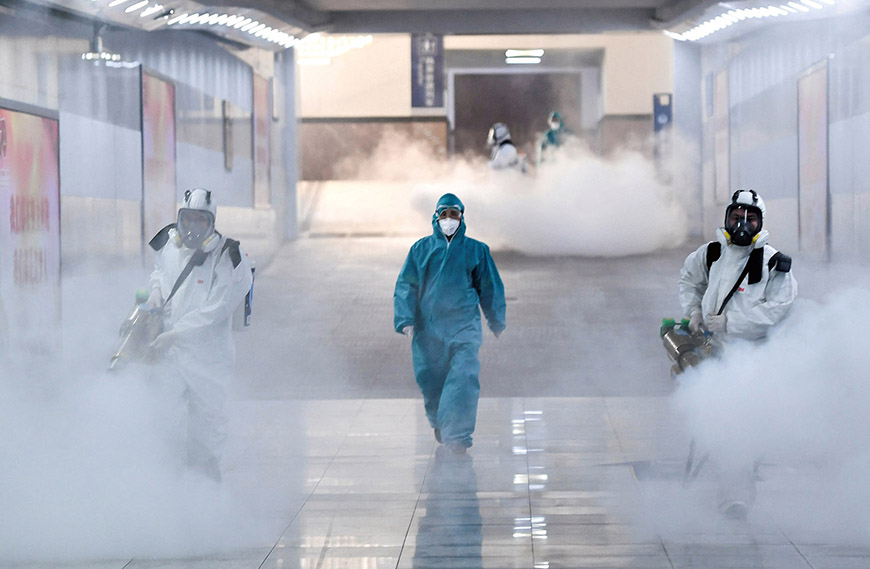
Anonymous, Disinfection in Wuhan (2020), © Cnsphoto / Reuters / Contrasto
The fourth section, “Photography as Diary,” explores photography as a tool for investigating the inner world—identity, desire, and memory that extends beyond visible evidence. The exhibition brings together artists who have used staging, the body, and self-representation as instruments for probing identity. Among them are Claude Cahun, Pierre Molinier, who in the 1960s explored desire and the metamorphosis of the body through deliberately transgressive and theatrical images, and Robert Mapplethorpe.
The fifth section, “Photography as Evocation,” is dedicated to the ambiguity of photographic language: a territory where photography becomes evocation, metaphor, and symbolic construction. Here, images reinvent reality through fiction, mise-en-scène, and visual layering. Featured artists include Newsha Tavakolian; Sandy Skoglund, whose surreal visual universe; Nancy Burson and her experiments in identity; David LaChapelle and his visionary stagings; and Mat Collishaw.
From the ambiguities of language, the exhibition moves into the sixth section, “Photography as a Compass for Tomorrow,” dedicated to emerging artists and the new imaginaries of the twenty-first century—a landscape in which the real and the post-digital constantly overlap. Contemporary photography here confronts, directly and radically, the themes that define our time: multiculturalism, gender issues, migration, civil conflict, environmental crisis, and new models of belonging. Featured artists include Ebrahim Noroozi, who reflects on the fragility of the relationship between humans and nature; Carlos Ayesta and Guillaume Bression, who explore the emptiness and absurdity of contaminated territories after nuclear disaster; and Gohar Dashti, who stages the home as a place of resistance and memory in war-torn areas. Alongside them is the work of Alba Zari, who investigates identity through an analytical, post-digital visual language.
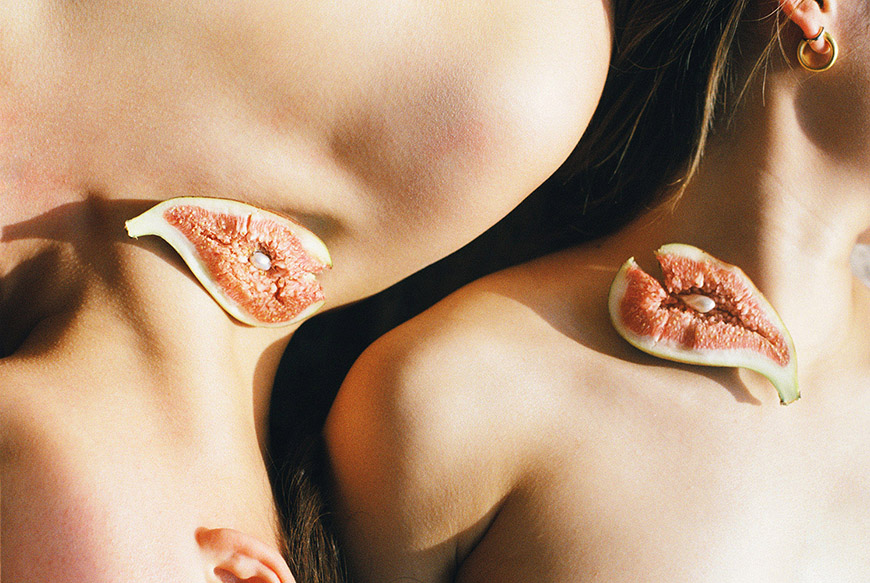
Lin Zhipeng aka No.223, Figs in pride (2022), courtesy of Pier Luigi Gibelli
100 photographs to inherit the world
MUDEC Via Tortona 56, (Lun-Ven 10.00-17.00), Milan, Italy
07 March 2026 – 28 June 2026
Opening times: Tue, Wed, Fri, Sun 09.30 ‐ 19.30 | Thu, Sat 9.30-22.30
All images have been provided by MUDEC – Museum of Cultures in Milan.
www.mudec.it

copyright Inexhibit 2026 - ISSN: 2283-5474
